

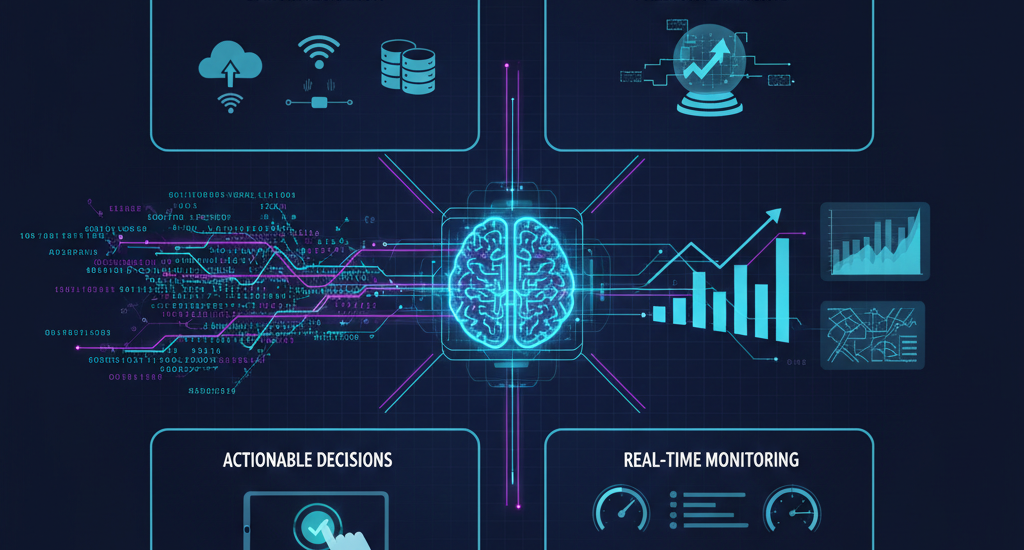
AI Analytics Software – Transform Data into Actionable Insights
In today’s data-driven world, organizations generate massive amounts of data daily. However, raw data alone cannot drive decisions. This is where AI analytics software comes in—powerful tools that leverage artificial intelligence to analyze, interpret, and visualize data, turning it into actionable insights. Unlike traditional analytics tools, AI-powered platforms use machine learning, natural language processing (NLP), and predictive modeling to deliver faster, more accurate, and scalable results.
AI analytics software enables businesses to:
- Accelerate Decision-Making: Quickly identify trends, anomalies, and patterns without waiting for manual reports.
- Predict Future Outcomes: Use predictive analytics to forecast sales, customer behavior, or operational risks.
- Automate Routine Analysis: Reduce the workload on analysts by automating repetitive data processing tasks.
- Enhance Business Intelligence: Combine descriptive, diagnostic, predictive, and prescriptive analytics in one platform.
For example, a retail company implemented an AI analytics platform to track customer behavior and predict product demand. Within months, the company reduced inventory costs by 20% and increased sales by 15% by aligning stock with predicted demand patterns.
In this article, we will explore everything you need to know about AI analytics software: how it works, key features, types of platforms, benefits, challenges, popular tools, and future trends. Whether you are a business leader, data analyst, or researcher, this guide will help you understand and choose the right AI-powered analytics tools to turn your data into actionable insights.http://aibygoogl.com
How AI Analytics Software Works
AI analytics software operates at the intersection of data science, machine learning, and business intelligence, transforming raw data into actionable insights. Unlike traditional analytics that simply summarizes historical data, AI-powered analytics platforms use advanced algorithms to uncover patterns, predict future trends, and recommend decisions.
The workflow of AI analytics software typically follows these stages:
1. Data Collection and Integration
AI analytics software begins with gathering data from multiple sources, including:
- Databases – SQL, NoSQL, cloud databases
- Enterprise systems – CRM, ERP, HR, or financial systems
- IoT Devices – Sensors and connected equipment
- Third-party data sources – APIs, market data feeds, social media
Integration tools automatically normalize and combine this data, ensuring consistency across structured and unstructured datasets. Modern platforms also support real-time streaming data, enabling businesses to act on insights instantly.
Example: A manufacturing company uses AI analytics software to integrate IoT sensor data and production records. This allows real-time detection of machine anomalies, reducing downtime by 30%.
2. Data Preprocessing and Cleaning
Raw data often contains errors, missing values, or inconsistencies. AI analytics platforms automatically preprocess data by:
- Removing duplicates or irrelevant records
- Filling missing values or correcting errors
- Standardizing formats for numerical, textual, and categorical data
Benefit: Clean and structured data ensures that AI models generate accurate and reliable insights rather than misleading outputs.
3. AI-Powered Analysis
The core of AI analytics software is advanced data analysis. This includes:
- Descriptive Analytics: Summarizes historical data to show what happened
- Diagnostic Analytics: Identifies the reasons behind past events
- Predictive Analytics: Uses machine learning models to forecast future trends
- Prescriptive Analytics: Recommends actions based on predictions
AI analytics platforms leverage machine learning algorithms, such as regression, classification, clustering, and neural networks, to uncover hidden patterns that traditional analytics cannot detect.
Example: A retail company uses predictive analytics to forecast product demand during peak seasons. The AI model predicts trends based on historical sales, promotions, and social media sentiment, allowing the company to optimize inventory.
4. Data Visualization and Reporting
Once analysis is complete, insights are visualized using dashboards, charts, and interactive reports. Many AI analytics tools support:
- Customizable dashboards for executives, analysts, or operational teams
- Interactive charts to explore data trends and correlations
- Natural language queries to ask questions in plain language, e.g., “Which products will sell the most next month?”
Benefit: Visualization makes complex AI outputs understandable for decision-makers, helping organizations act quickly on insights.
5. Actionable Insights and Decision Support
The final stage involves converting AI outputs into actionable business recommendations:
- Alerting stakeholders to anomalies or risks
- Suggesting marketing strategies based on customer behavior
- Optimizing operations to reduce costs and increase efficiency
Case Study: A healthcare provider implemented AI analytics software to analyze patient records. The platform flagged patients at risk of readmission, allowing proactive interventions that reduced readmission rates by 18%.
Summary Table: AI Analytics Software Workflow
| Stage | Function | Key Benefits | Example |
|---|---|---|---|
| Data Collection & Integration | Gather data from multiple sources | Real-time insights, complete datasets | IoT and production data integration in manufacturing |
| Data Preprocessing | Clean and standardize data | Accurate model predictions | Removing duplicates and filling missing values |
| AI-Powered Analysis | Predictive, prescriptive, descriptive, diagnostic | Detect patterns, forecast trends | Retail demand forecasting during peak season |
| Data Visualization | Dashboards, charts, interactive reports | Easy interpretation for decision-makers | Executive dashboards for sales teams |
| Actionable Insights | Recommendations and alerts | Faster decision-making, improved efficiency | Healthcare readmission risk alerts |
Key Features of AI Analytics Platforms
Modern AI analytics software is packed with features designed to simplify data analysis, improve decision-making, and uncover hidden insights. Understanding these features is crucial for selecting the right platform that meets your organization’s needs.
1. Automated Data Processing
One of the most valuable features of AI analytics platforms is automated data processing. This reduces the manual effort required to clean, transform, and integrate data from multiple sources.
Capabilities include:
- Data cleansing and normalization: Correct errors, remove duplicates, and standardize formats
- Data integration: Combine data from CRMs, ERPs, IoT devices, and cloud sources
- Real-time processing: Analyze streaming data for instant insights
Benefit: Automation ensures faster and more accurate analytics, allowing teams to focus on decision-making instead of data preparation.
2. Predictive Analytics
AI analytics platforms use machine learning algorithms to forecast future trends, outcomes, and behaviors:
- Predict customer behavior, such as churn or purchase intent
- Forecast sales, demand, or operational performance
- Anticipate market trends or risk factors
Example: A logistics company applied predictive analytics to delivery data, optimizing routes and reducing late deliveries by 25%.
3. Prescriptive Analytics
Beyond predicting outcomes, some platforms offer prescriptive analytics, which recommends actionable steps to achieve desired results.
Capabilities include:
- Optimizing inventory levels based on predicted demand
- Suggesting marketing campaigns targeting high-value customers
- Recommending operational improvements to reduce costs
Benefit: Prescriptive insights allow businesses to take proactive actions rather than just reacting to trends.
4. Data Visualization and Dashboards
Visualization tools turn complex AI outputs into easy-to-understand graphs, charts, and dashboards:
- Custom dashboards for different roles (executives, analysts, operations)
- Interactive visualizations to explore relationships and trends
- KPI tracking to monitor key performance indicators in real-time
Example: A retail chain used an AI analytics platform to visualize customer purchasing patterns, enabling category managers to adjust promotions dynamically, increasing revenue by 10%.
5. Natural Language Processing (NLP) Queries
Many AI analytics tools now support natural language queries, enabling users to ask questions like they would with a human analyst:
- Example questions: “Which products will see the highest demand next quarter?”
- NLP interprets queries and delivers insights without complex coding
Benefit: This feature democratizes AI analytics, allowing non-technical users to access insights easily.
6. Anomaly Detection
AI analytics platforms can identify unusual patterns or potential risks in data:
- Detecting fraud or suspicious transactions in finance
- Monitoring equipment for early signs of failure in manufacturing
- Highlighting deviations in customer behavior or supply chain metrics
Impact: Early detection reduces risk, prevents losses, and improves operational efficiency.
7. Integration Capabilities
Effective AI analytics software seamlessly integrates with existing business tools:
- CRMs (e.g., Salesforce), ERPs (e.g., SAP), cloud storage, and databases
- APIs for connecting third-party data sources
- Workflow automation tools for smoother operations
Benefit: Integration ensures that AI insights are actionable within existing business processes.
8. Security and Compliance
Handling sensitive data is a key concern for businesses using AI analytics software:
- Encryption of data in transit and at rest
- Compliance with regulations like GDPR, HIPAA, and CCPA
- Role-based access controls to secure sensitive information
Importance: Protecting data ensures trust and legal compliance, which is critical for enterprises and healthcare organizations.
Summary Table: Key Features of AI Analytics Platforms
| Feature | Function | Benefit | Example |
|---|---|---|---|
| Automated Data Processing | Clean, integrate, and normalize data | Faster and accurate insights | IoT data integration for manufacturing |
| Predictive Analytics | Forecast trends and behavior | Anticipate outcomes and demand | Logistics delivery optimization |
| Prescriptive Analytics | Recommend actions | Proactive business decisions | Inventory optimization in retail |
| Data Visualization | Dashboards and charts | Simplify insights for decision-makers | Revenue tracking dashboards |
| NLP Queries | Ask questions in plain language | Non-technical access to AI insights | Query sales trends without coding |
| Anomaly Detection | Detect unusual patterns | Prevent losses and reduce risk | Fraud detection in finance |
| Integration | Connect with business tools | Actionable insights within workflows | CRM and ERP data integration |
| Security & Compliance | Data protection and regulations | Maintain trust and legal compliance | HIPAA-compliant healthcare analytics |
Types of AI Analytics Software
AI analytics software comes in several types, each designed to address specific business needs and analytical challenges. Understanding the differences helps organizations choose the right tool for their goals.
1. Predictive Analytics Tools
Predictive analytics software uses historical data and AI models to forecast future outcomes. These tools are ideal for businesses that want to anticipate trends, risks, or customer behavior.
Key Features:
- Regression, classification, and time-series forecasting models
- Scenario simulations and risk analysis
- Predictive scoring and ranking
Use Case: A retail company uses predictive analytics to forecast seasonal demand, helping them optimize inventory and reduce overstock by 15%.
2. Descriptive Analytics Platforms
Descriptive analytics tools focus on understanding what has happened in the past. They summarize historical data and provide insights through charts, dashboards, and reports.
Key Features:
- Data aggregation and reporting
- Trend analysis and KPI monitoring
- Visual dashboards for decision-making
Use Case: A marketing team uses descriptive analytics to analyze campaign performance over the last quarter, identifying which strategies drove the most conversions.
3. Prescriptive Analytics Solutions
Prescriptive analytics platforms go beyond prediction and provide actionable recommendations. They help organizations decide what to do next to achieve desired outcomes.
Key Features:
- Optimization algorithms and recommendation engines
- Scenario planning for multiple potential outcomes
- Automated action triggers based on AI insights
Use Case: An e-commerce business uses prescriptive analytics to suggest personalized offers to customers, increasing purchase rates by 20%.
4. Diagnostic Analytics Tools
Diagnostic analytics software answers the question, “Why did it happen?” These tools analyze past data to identify root causes of events or anomalies.
Key Features:
- Correlation and causation analysis
- Drill-down reporting for detailed insights
- Data segmentation and clustering
Use Case: A hospital uses diagnostic analytics to investigate why certain treatments had lower success rates, allowing them to adjust procedures and improve outcomes.
5. Self-Service AI Analytics Software
Self-service AI analytics platforms are designed for non-technical users. They allow employees to access AI insights without deep data science knowledge.
Key Features:
- User-friendly interfaces and drag-and-drop dashboards
- Natural language query support
- Pre-built templates for common business scenarios
Use Case: A small business uses self-service AI analytics to track website performance and customer engagement without hiring a full analytics team, enabling faster, data-driven decisions.
Summary Table: Types of AI Analytics Software
| Type | Purpose | Key Features | Example Use Case |
|---|---|---|---|
| Predictive Analytics | Forecast future outcomes | Machine learning models, scoring, simulations | Retail inventory forecasting |
| Descriptive Analytics | Understand past events | Aggregation, dashboards, KPI monitoring | Marketing campaign performance |
| Prescriptive Analytics | Recommend actions | Optimization, scenario planning, triggers | Personalized e-commerce offers |
| Diagnostic Analytics | Identify causes | Correlation analysis, drill-down reporting | Hospital treatment analysis |
| Self-Service AI Analytics | Accessible insights for non-experts | Drag-and-drop, NLP queries, templates | Small business website tracking |
Benefits of Using AI Analytics Software
AI analytics software offers a wide range of benefits, enabling organizations to make smarter decisions, optimize operations, and gain a competitive edge. Unlike traditional analytics, AI-powered tools can process large datasets, uncover hidden patterns, and provide predictive and prescriptive insights.
Here are the key benefits in detail:
1. Accelerated Decision-Making
AI analytics platforms process data much faster than traditional methods, delivering real-time insights. Decision-makers no longer need to wait for lengthy reports; they can act on data-driven recommendations immediately.
Example: A supply chain company used AI analytics software to monitor inventory levels and shipping delays. Real-time alerts allowed managers to adjust shipments on the fly, reducing late deliveries by 30%.
2. Improved Accuracy and Predictive Capabilities
By leveraging machine learning and predictive algorithms, AI analytics software reduces human error and improves the accuracy of forecasts. Organizations can anticipate future trends, customer behavior, or operational bottlenecks with higher confidence.
Example: A bank implemented predictive analytics to forecast loan default risk. The AI model improved risk assessment accuracy by 20%, allowing better decision-making for loan approvals.
3. Cost Savings and Operational Efficiency
Optimizing processes using AI analytics can reduce unnecessary costs and improve resource allocation:
- Identify inefficiencies in operations
- Optimize inventory and supply chains
- Reduce manual labor for data analysis
Example: A retail chain used AI-powered analytics to optimize inventory management, reducing overstock costs by 15% while maintaining product availability.
4. Enhanced Business Intelligence
AI analytics software combines descriptive, diagnostic, predictive, and prescriptive analytics, providing a holistic view of business performance. This enables organizations to:
- Monitor KPIs effectively
- Detect anomalies and risks early
- Make proactive, rather than reactive, decisions
Case Study: A healthcare provider used AI analytics to monitor patient outcomes, detect trends, and predict potential complications. This led to better patient care and lower readmission rates.
5. Scalability and Flexibility
AI analytics platforms can handle large and complex datasets, making them suitable for enterprises of all sizes. They can scale as data volume grows and adapt to different industries, such as finance, healthcare, retail, and manufacturing.
Example: A multinational e-commerce company leveraged AI analytics to analyze global sales data across regions, allowing customized marketing strategies for each market.
Summary Table: Benefits of AI Analytics Software
| Benefit | Description | Example |
|---|---|---|
| Accelerated Decision-Making | Real-time insights for faster actions | Supply chain adjustments reducing late deliveries |
| Improved Accuracy | Predictive analytics reduces errors | Loan default risk assessment in banking |
| Cost Savings & Efficiency | Optimize resources and operations | Retail inventory management reducing overstock |
| Enhanced Business Intelligence | Holistic insights from multiple analytics types | Healthcare patient outcome monitoring |
| Scalability & Flexibility | Handle large datasets across industries | Global e-commerce sales analysis |
